
Baselining
What do I think I'll find on this trip? Well, my research is exploratory and given the niche, unique nature of adoptee communities I am granting myself flexibility to follow what interests me, as it comes up. I want to make the most of this rare time in the northern hemisphere and follow any trail that interests me!
I'm so appreciative I have quite a number of non-adopted subscribers so as a starting point, I'd like to outline some basic background information about intercountry adoptees (a person adopted from one country to another).
Most intercountry adoptees are placed with Caucasian parents and grew up in predominately white communities in America, Europe and Australia. Adoptees may experience challenges related to positive self-image and belonginess in their country of residence. Many adoptees grew up wishing they were white, like their adoptive family and surrounding environment. In my case, I can only remember ever feeling 100% Australian during my childhood and teenage years however my own country, Australia, often did not assume or accept that I was a "real" Australian. Through my professional career, many people were dubious if I was actually the "Shaun Hardwick" (I've since changed my name for other reasons) they booked a meeting with. Then curiosity would usually get the better of them and they'd ask where my parents were from, which usually didn't produce the information they were looking for, then I had to decide whether I had energy to explain my personal circumstances to a stranger, again, and out myself as an adoptee. It can be tiring.
And when you disclose you're an adoptee, without fail, the next question is almost always "have you found your real/birth/biological family?" That is a really personal, emotionally taxing question for most of us!!
There is a common societal narrative that adoptees are so lucky to have been adopted and we must be so grateful for being "saved". And what loving parents we must have. While this can be true, it does not acknowledge the great losses we also experienced. We should be happy we lost our country of origin's culture? We should be grateful we were displaced halfway around the world, making it logistically and financially challenging if we ever wanted to explore our roots? This narrative is also messier since Korea's Truth and Reconcilliation Commission determined their overseas adoption program was rife with corruption, document falsification and breaches of human rights. It's hard to feel grateful for that.
Adoptees were abandoned at the start of their life. There is much research that suggests the broken link between mother and child can leave permanent, subconscious scars that can impact an adoptee for the rest of their lives. Even if not at a biological level, knowing you were abandoned by your first family can be tough to deal with. And in my adult years I was surprised and saddened to learn that quite a number of adoptees never felt integrated with their adoptive family.
Due to a combination of many factors, some described above, adoptees are more likely to develop mental health issues compared to a non-adopted person.
When adoptees return to their country of origin, it can often result in anxiety, shame or embarassment. In many instances, we are not immediately welcomed back. Most of us can only speak English or our adoptive country's language, and our parents typically weren't very familiar with the country they adopted from to be able to tell us about where we were from in any great detail. It can be intimidating to return to. It can also go the other way and be the most incredible experience walking amongst a country of poeple who look like you, for the first time in your life. Adoptees can experience great acts of kindness too. It's complicated and a roulette wheel of emotions.
Those are just some examples of very common experiences adoptees navigate throughout their lives, and it can be tiring to try and explain it. However, amongst other adoptees, we can learn that we were not the only ones who had these experiences and when talking about our lived experiences we are able to describe and share, without the need to break it down or explain. It is met with immediate understanding. I believe this is the basis for why adoptee communities have formed over the past decades. The other big element is peer-to-peer advice about searching for birth family or generally returning to our birth country. There is something special about being in a room with others who share a similar origin story.
Returning to the scope of my research, I had a few things on my mind before I left Australia:
Geography:
There are an estimated 3,500-4,000 Korean adoptees in Australia. Perhaps ~10,000 intercountry adoptees in Australia in total.
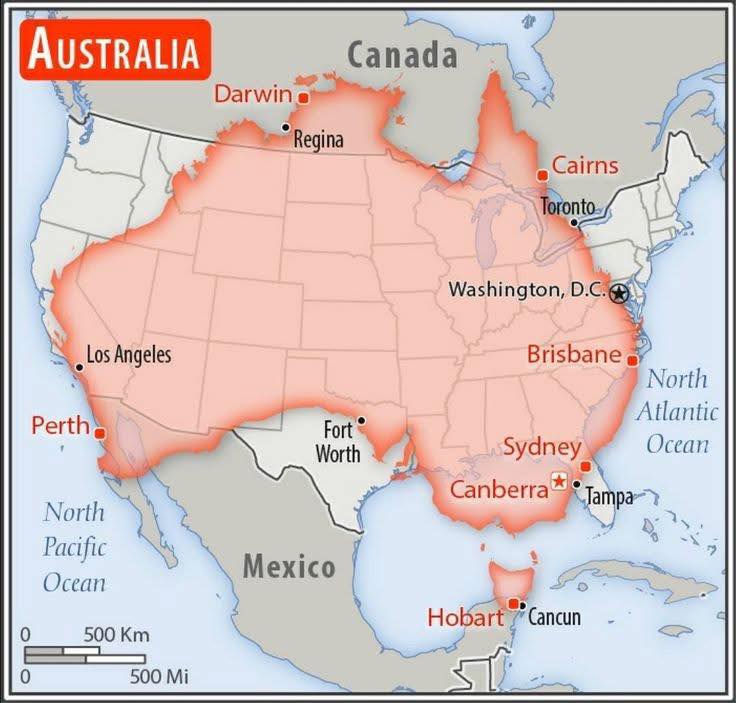
Australia is large and our relatively small adoptee population is dispersed across an entire continent.
Meeting in-person at a national level is logistically challenging and costly.

Consistency:
Within the Korean Adoptees in Australia Network Inc (KAIAN), we typically run events based on successful grant applications which are sporadic.
I'm not aware of any other adoptee organisations in Australia that run a consistent schedule of in-person events for adoptees. It's an every-now-and-then occurrence.
Also Known As, the New York City adoptee organisation, has a large adoptee population and runs two events a month. Many others have programming on at least a monthly basis, which is what I'd like us to have in Australia but delivered under a sustainable volunteer model that isn't reliant on just one person to organise.
High potential:
Although we don't have a regular cadence of adoptee events or conferences in Australia, we have a depth of long-term contributors and supporters of adoptee interests. As far as I'm aware, we just don't have a home for it on a regular basis.
Funded post-adoption services:
The Australian government funds an intercountry adoptee and family support service (ICAFSS) that provides free counselling specifically tailored for adoptees and adoptive families. All counsellors receive adoptee-specific training.
All in all, I think this service meets the requirement as a fully subsidised public service.
ICAFSS also funds up to 20x $5,000 small grants per year to support adoptee projects, events or activities.
While this is a globally privileged type of grant to have access to, this encourages one-off events and we don't have access to equivalent funding to support longer-term adoptee community capacity building. I'm keen to investigate alternative models, particularly in comparison to what is available in some European countries.
Research Considerations:
Country-specific adoptee communities versus a broader adoptee community.
Developing community with non-adoptees (i.e. Korean Society of Victoria)
State-based versus national models.
The need for fair, democratic adoptee communities (member-elected leaders)
plus effective "code of conduct" management
The pursuit of justice versus happiness. Does one have to suffer in order to obtain the other?
Is a standalone adoptee capacity-building organisation in Australia feasible?
What do adoptees around the world need to heal?
How do you create all of this while minimising risk of conflict? Many adoptee groups have experienced conflict due to alternative opinions and passions, then ceasing to exist, or split, or created divided groups.
As the name of my website suggests, I am focused on future outcomes and improvements. What can we do next month/year to make this a better world for ourselves? Our adoptions have occurred quite some time ago for most of us, so what is it we need to live our best, remaining lives? The answer is likely to be a combination of peer-run adoptee communities, government and private support services. Perhaps some new allies along the way. If it's not available today, how can we a regularly vibrant, engaged adoptee community and what supports are required to live a more fulfilled life?
![Five lessons Also Known As taught me about community leadership [NYC part 2]](https://static.wixstatic.com/media/98e78f_2f3091388c98433fb648527b7b078d07~mv2.jpg/v1/fill/w_980,h_627,al_c,q_85,usm_0.66_1.00_0.01,enc_avif,quality_auto/98e78f_2f3091388c98433fb648527b7b078d07~mv2.jpg)
![Also Known As 30th Anniversary Conference in New York City (April 16-19) [part 1]](https://static.wixstatic.com/media/98e78f_63544ce3287343eea6d9372c6c57750e~mv2.jpg/v1/fill/w_980,h_735,al_c,q_85,usm_0.66_1.00_0.01,enc_avif,quality_auto/98e78f_63544ce3287343eea6d9372c6c57750e~mv2.jpg)

Comments